Mend, Make Do or Modernise: A Homeowner's Framework for Ageing Windows
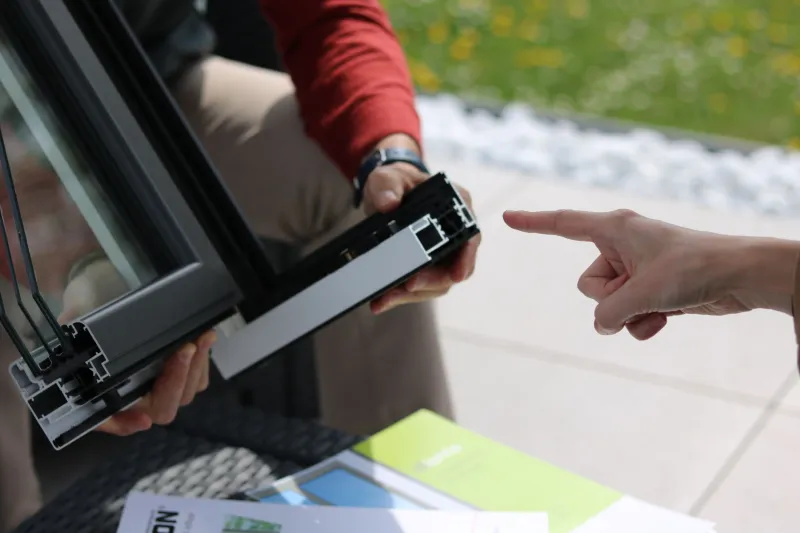
Older windows deserve a fair hearing. A window that has served a house for twenty or thirty years may still have sound frames, reliable hardware and years of useful life left. Equally, a window that looks acceptable from the pavement can be letting heat escape, admitting noise and demanding repeated attention. The sensible question is not simply whether to repair or replace, but which course of action gives the best balance of comfort, security, cost and disruption for that particular window.
Start With the Fault, Not the Age
Age alone is a poor guide. A well-maintained timber window can outlast a poorly fitted modern unit, and a twenty-year-old uPVC window may be in perfectly serviceable condition. The first step is to identify what has actually failed. Common problems include misted double-glazed units, draughts around hinges or seals, broken locks and handles, failed weather seals, and condensation between panes.
Some of these are isolated faults. A misted sealed unit, for example, usually means the glass unit has lost its airtight seal; the frame itself may be entirely sound. A sticking lock may need adjustment or replacement rather than a new window. A draught at the hinge side may be cured by new gaskets or a simple adjustment. Diagnosis matters because it prevents a small failure being treated as evidence that the whole window is beyond use.
The Repairs That Usually Make Sense
Repair is often the rational choice when the frame is structurally sound, the window still suits the property and the fault is limited to one component. Replacing a sealed glass unit in a sound frame is a well-established repair and can restore clarity and thermal performance without the cost and disruption of full replacement. New hinges, handles, locks and weather seals can also extend the working life of a window considerably.
Timber windows may benefit from splicing, filling and repainting where rot is minor and localised. Aluminium and uPVC frames can often accept new hardware or gaskets. In each case, the test is whether the repair addresses the cause of the problem rather than merely masking it. A draught treated with new seals is a repair; a draught caused by a warped frame that no longer closes squarely may return as soon as the seal is compressed.
When Replacement Begins to Pay
Replacement becomes the stronger option when the window has multiple failures rather than one. If the frame is distorted, the seals have failed throughout, the glass is single-glazed or the hardware is obsolete and no longer reliable, repeated repairs can become a false economy. The same applies where the window is difficult to secure, cannot be adequately ventilated, or is so poorly performing that the room is uncomfortable in both winter and summer.
Energy performance is part of this calculation, but it should be considered honestly. A single-glazed window with a sound frame may still be improved with secondary glazing or a well-fitted draught-proofing regime. A double-glazed window with failed units may perform poorly until the glass is replaced. Full replacement is most compelling when it solves several problems at once: thermal performance, draughts, noise, security and ease of use. It is least compelling when it is proposed solely because the window is old.
A Simple Three-Question Test
A useful framework is to ask three questions. First, is the frame sound? If the frame is rotted, warped or structurally compromised, replacement deserves serious consideration. Second, is the fault isolated? If one pane is misted or one hinge has failed, repair is usually the place to start. Third, will repair deliver a lasting result? If the same window has been repaired repeatedly, or if spare parts are no longer available, replacement may be the more economical choice over time.
A fourth question is often worth adding: what else would replacement improve? If the answer is only appearance, a homeowner may prefer to wait. If the answer includes security, ventilation, noise reduction and lower heating demand, the case is stronger.
Avoid the Unnecessary Sale
Homeowners should be wary of any assessment that jumps to replacement without examining the individual components. A reputable specialist will identify whether the glass, frame, seals or hardware have failed and explain which repairs are feasible. It is reasonable to ask for a repair option in writing, even if replacement is also quoted. It is also reasonable to ask what the repair would achieve and how long it is expected to last.
Comparisons should be made on a like-for-like basis. A cheap repair that lasts two years is not necessarily better value than a replacement that lasts twenty, but nor is a replacement automatically better value than a well-executed repair. The correct comparison includes the cost of the work, the expected service life, the effect on energy bills and the disruption involved.
Getting a Fair Comparison
Obtain a clear diagnosis before obtaining prices. Ask the installer to state what has failed and why. Request a repair quote and a replacement quote where both are realistic. Check whether the replacement quote includes making good, disposal, building regulation compliance where required, and any decoration affected by the work. For repairs, confirm the warranty on parts and labour.
Older windows are not automatically a problem to be solved by replacement. Many can be brought back to useful service with targeted work. Others have reached the point where replacement is the more honest long-term answer. The difference lies in diagnosis, not in the age of the window alone.
A measured approach protects both comfort and budget. Repair what is sound and repairable; replace what is failing in several ways at once; and insist on a clear explanation before committing to either.